
News
The Ins and Outs of Online Gambling in India: Laws and Legislation Explained


Needless to say, the online gambling industry has dominated the world by storm. In a nutshell, gaming industries from across the globe are thriving. In particular, the Indian market has experienced significant growth throughout the last couple of years. More and more players are trying their hand out at casino games and just in general experience what the gambling world has to offer.
Whether they’re raising their stakes at floating casinos in India, abroad or online, Indian players have expressed a keen interest in gambling. This is illustrated in some stats and figures; by the end of 2020, the Indian market generated over 90 billion in Indian Rupees.
Whilst all this sounds great, there is one issue that India has been dealing with for years. Even though we are living in 2021, Indian lawmakers still abide by ancient gambling laws, some of which are over 154 years old! So, what does this mean for players and casino operators?
An Insight into India’s Gambling Laws
With reference to the Indian Constitution, it is stated that all forms of gambling are regulated at state level. In other words, this mean that each Indian state has its own laws and legislations when it comes to gambling, particularly when it comes to online casino games. Needless to say, players and operators aren’t happy about this since it’s severely impacting the industry.
This all boils down to one thing. As mentioned in earlier sections of this post, India remains stuck in the past as far as gambling rules are concerned. A prime example of this is the Public Gaming Act of 1867. This 134 legislative document was published during the British role. Evidently, such documents don’t make sense now that most of us have witnessed the advent of the internet and the continuous developments made in the technological field.
But alas, Indian lawmakers beg to differ. Let’s take a look at some statements in the Public Gaming Act of 1867. For starters, the operation of Indian casinos is strictly prohibited. So, is the assisting and visiting of these venues. On top of that, financial gambling, devices and anything remotely related to gambling is also forbidden. In fact, you can face a ₹200 fine or even face up to 3 months in prison.
The Act also defines gambling into two separate categories – Games of Chance and Games of Skill. The problem with this lies here – one cannot completely class a casino game as a Game of Skill or Chance. This is because certain games have hints of both skill and chance.
At the time of writing, India has identified only 13 card games as games of skill, including rummy and poker. As far as online betting goes, horse racing and cricket betting also fall under this category. Without a doubt, lots of reforms are in order if lawmakers want to see the industry really thrive in the years to come.
The Problem with Online Gambling
All this brings us to the main topic of this discussion – online gambling in India. Evidently, there is a dire need for more sensible laws to be imposed. Since lawmakers are still adamant to stick to incredibly archaic laws, this is causing a lot of problems for casino operators who want to set up shop in India.
What’s even more surprising is that all these acts and laws don’t even given an appropriate definition to what online gambling is. As of now, only states like Nagaland, Telangana and Andhra Pradesh have chosen to update their anti-gambling policies. On top of that, they have also stated where they stand with online gambling. So far, it’s not good news.
Very recently, the state of Andhra Pradesh published its Gaming Ordinance. Initially, casino operators thought this would benefit them, but once again they couldn’t be more wrong. In other words, if you’re an operator, you can rule out the possibility of having online casinos set up in this state for the time being. On top of that, the ordinance has also issued a ban on all online games including games of skill. Of course, casino operators aren’t very happy about this and rightly so. In fact, they plan on appealing this at the Supreme Court.
That said, there is some good news to report here. As of now, the Supreme Court of Andhra Pradesh has stated that games of skill aren’t really linked to gambling and operators who offer these services are allowed to do us under the Indian Constitution.
Still, it’s not all sunshine and rainbows for casino operators who want to offer casino games and services in the country. In fact, operators have had to deal with more acts such as the Information Technology Act of 2000. Given that it’s all about gambling one would think that the government is actually thinking about adequate solutions that would make both parties happy.
But alas, we’re back in square one. This act caused more harm than good as the blocking servers restricted operators from offering their services to Indian players. What’s more, we also have yet another example where no appropriate definition is given to online gambling. Let’s face it, the world is living and breathing gambling at this point. After all the industry is worth billions nowadays – so how can one not explain what online gambling is? The mind boggles.
We understand that lawmakers want to curb the rise of unregulated gambling from dodgy casinos, however, sticking to ancient laws will cause more problems in the long run.
Players Can Still Enjoy the Online Casino World
That said, there is a silver lining. Whilst operators still have to long road ahead of them, players can still enjoy their time online. In fact, you’ll find lots of reputable providers listed on Casinos-india.in. Given that this is an affiliate partner, the games and bonuses are obviously not offered by them. Instead, you are offered trusted offshore casino partners that are legally allowed to offer their services to Indian players.
As you can see, things aren’t so bad for players. That said, there are still some regulations you should keep in mind. Whilst you are required by law to choose an offshore licensed platform, it’s still your safest bet. In this way, you can avoid getting scammed by dodgy providers that still manage to slip through the cracks even though the situation is heavily regulated. Trust us when we say that rogue casinos offer rigged games and you’ll probably never get your winnings. In other words, avoid at all costs.
You can sign up to platforms that clearly state that they are licensed by reputable gaming bodies such as the Malta Gaming Authority.
One also has to keep in mind the legal gambling age. In this case, it’s generally 18 and over. However, some online casinos will require to be over 21 years of age. So, make sure you read all the Terms and Conditions carefully when you track down your desired provider. Finally, you can also join an offshore casino if it is Rupee-friendly. You can also avail from alternatives that allow conversions.
The Benefits of Legalizing Online Casinos
At this point, it’s fair to say that Indian gambling laws are all over the place. We can only hope that the situation changes over time. At the end of the day, the market and India in general can benefit from the legalizing and regulation of online casinos.
Whilst we acknowledge that there is a problem with unregulated gambling, the right regulations can mark a significant change in the way things are carried out in the country. Strict laws that don’t make sense will not solve anything; on the contrary, these will cause of more uproars by casino operators and in general more confusion. Simply put, the country needs to stick to one legislation that is able to fully regulate and license games of skill. The laws in place can then be supported by further regulations created by gaming bodies.
Given that Indian players are allowed to sign up to offshore platforms, lawmakers should consider making it official in India. In this way, India will get more recognition, whilst players can get a taste of the best online casino games, bonuses and more. Above everything else, they’ll still be signing up to safe and secure platforms that do things by the book.
Of course, a complete reform is needed when it comes to online gambling. That said, some progress has been made. For example, in states like Maharashtra, casino operators and lawmakers are constantly in talks with regard to how they can legalize and regulate online gambling. At this point, nothing is confirmed, but it’s a start.
In the long run, we really think that India can benefit form a regulated market. In fact, some statistics suggest that the country is losing over $140 million per year due to unregulated gambling. This can be solved if both casino operators and lawmakers can come to an agreement on how to offer a licensed and regulated market.
At the time of writing, the growth behind India’s online gambling market is driven by the middle class and the continuous development of the internet and advanced technologies. With a 50% penetration rate, there are 560 million internet users in the country. Needless to say, this is great considering India is in second place after China.
All we’ll say is don’t understatement the Indian market even though it’s one of the smaller ones. Clearly, it’s making it’s mark on the world and it’s very obvious that casino operators and players are keen. Keep in mind that this is something that wasn’t available in the past. Of course, lifestyles became more comfortable over the years. This also meant that people started expressing an interest in different things – online casino is one of them.
Legalizing online casinos will also offer more jobs. Without a doubt, this would be extremely beneficial to India since the country can compete within this competitive market. This can open more doors to more start-up businesses within the e-Commerce and iGaming sectors. On top of that, the Indian economy will also benefit from all this. Other job opportunities can also crop up if this is done properly. Some of these include employment within software development companies and online payments.
At the end of the day, a regulated market will not only put lawmakers’ minds at rest, but it also creates a safe space for players and operators who just want to do things by the book. This can be achieved if one carries out regular audits of casino operators that have been approved and regulated by the government.
This is the only way that the situation can be monitored and one is able to distinguish a good casino from a bad one.
Without a doubt, the interest in the online gambling world won’t be dying away any time soon. So let’s hope Indian lawmakers can get on board with more adequate regulations that make sense in this day and age.




Traffic performance isn’t just about volume or source. What really matters is how well the product turns the first deposit into repeat ones. That’s what drives conversion, retention, repeat deposits, and ultimately LTV — and that’s what defines a partner’s real revenue.
Behind the Game is a series of expert-driven articles where N1 Partners’ gambling affiliate program teams break down what’s happening inside the product and which decisions actually move key metrics.
In this edition, we focus on retention and how it impacts product sustainability and partner earnings.
Why Retention Turns Traffic Into Revenue
Retention is the clearest indicator of whether your traffic matches the actual value of the product. If players don’t come back after their first deposit, the product simply doesn’t convert in the long run.
In Tier-1 GEOs, acquisition costs can reach hundreds of euros. If players don’t make repeat deposits, both the operator and the partner lose.
That’s why success isn’t just about acquisition — it’s about product quality. The N1 Partners portfolio includes high-converting brands with Reg2Dep reaching up to 70% and strong LTV, allowing partners to monetize traffic more efficiently and reach profitability faster.
1. What “Healthy Retention” Looks Like in 2026
In 2026, retention is no longer measured by a single metric. It’s a combination of signals across the entire post-FTD journey.
The key is not just how many players return, but where they drop off.
What key indicators help quickly assess retention quality after FTD?
The core metrics are funnel progression and cohort analysis. Players who move quickly through stages like 1–6 / 1–8 deposits typically form a loyal, active base.
All further communication and retention flows are built to increase transition rates across these stages.
Where does the player journey usually break after the first deposit, and how is it reflected in the data?
The most sensitive point in the FTD funnel is the 1-2 deposit transition. After the first deposit, players start actively testing the product.
At this stage, retention is influenced by several factors: product UX, game variety, overall experience, and withdrawal speed.
All of these pain points are taken into account when building communication flows.
2. Why Retention Drops and What Can Be Fixed Fast
Retention drops are usually caused by mismatched expectations, bonus fatigue, weak personalization, or poor timing in communication.
Some issues can be fixed quickly via CRM and offer adjustments, while others require deeper product-level changes.
What are the top 3 reasons for retention drop across projects? What can be fixed quickly vs. what requires systemic changes?
Retention issues can be divided into three main groups.
Technical and operational issues: payment methods, access to the product, mirrors. These directly impact churn and can usually be fixed quickly. Solutions include alternative payment options, explanatory communication, temporary bonuses, and updated access points.
Product and retention mechanics: weak offers, low engagement. These require revisiting promo strategies, segmentation, and retention flows, and cannot be fixed instantly.
Traffic quality. This is the most complex area, as the issue may lie either in the traffic itself or in how it is processed. It requires behavioral analysis, source comparison, and hypothesis testing across offers, channels, and mechanics. In some cases, this leads to a full revision of the traffic strategy.
What traffic red flags almost always lead to weak retention?
- A high share of players with only one deposit and an untouched balance is a major red flag and often indicates fraud.
- Another common case is bonus hunters. These users exploit welcome offers and then either create duplicate accounts or move on to other brands with the same intent.
3. Reactivation and Bringing Players Back
Reactivation plays a critical role in extending LTV. Players may lose interest, shift habits, or move to other products — but that doesn’t mean they’re gone for good.
What are the key advantages of the reactivation funnel across N1 Partners projects?
The reactivation approach combines team experience with flexible scenarios. Multiple return flows are used, each with different types and values of offers.
Additionally, a system has been implemented to increase engagement after the player returns, which helps grow the share of repeat deposits within this segment.
Another key factor is the speed of identifying players who are about to churn. This is achieved through platform updates, filtering systems, and accumulated behavioral insights.
These elements, combined with a variety of offers and alternative communication channels such as SMS and call centers, make it possible to bring back players who are typically considered “lost.”
4. Mechanics That Actually Retain Players
Retention works best when the product taps into different player motivations: emotion and chance, progress and achievement, status and competition.
What unique features or promos across N1 Partners projects stand out and why do they work for retention?
With deeper analytics, the team gained a better understanding of player behavior and preferences. Promos are now built around real data: favorite games, average bets, and behavioral patterns, making them significantly more effective.
Key mechanics include front-facing features like Bonus Shop and Lucky Spin & Lucky Box. Around 60% of the loyal user base makes at least one purchase in the bonus shop monthly, while over 70% engage with randomizer mechanics.
Puzzle Hunt has also shown strong results, combining randomness with gamification through puzzle collection and a high-value final reward. This mechanic performs especially well among VIP players.
5. Building the Habit: Missions, Calendars, and Loyalty
Strong retention comes from giving players a reason to come back regularly.
Why do missions, calendar-based activities, and loyalty progression drive retention and LTV?
Gamification and FOMO play a key role. Mechanics are designed to drive continuous engagement:
- Earning in-product points
- Daily bonus loops (“come back every day”)
- Loss aversion (miss a day – lose rewards)
Instant reward missions are especially effective. Players complete a task, get rewarded immediately, and return for the next one.
With a younger audience, the “here and now” principle becomes one of the strongest engagement drivers.
6. Loyalty and VIP: Why Progression Beats One-Off Bonuses
Loyalty programs outperform one-time bonuses when players have a clear sense of progression. Levels and checkpoints create momentum and give players a reason to keep coming back.
The key is balance: early levels must feel rewarding and accessible, while higher tiers and VIP rewards should motivate high-value players.
How can you tell if a loyalty program truly drives retention rather than just distributing bonuses?
Effectiveness is measured through impact on behavioral and financial metrics. Key indicators include repeat deposits, ARPU, GGR per player, retention, and churn rate.
It’s also critical to compare program participants with a control group. If participants generate higher revenue and stay active longer, the program is delivering value.
If bonus costs increase without corresponding growth in GGR or LTV, the program is likely just giving away money.
Why Retention Equals Long-Term Revenue
Retention determines whether traffic turns into long-term profit. When done right, the first deposit becomes the start of a cycle of repeat activity — not a one-off event.
If there’s one key criterion for choosing a RevShare brand, what should it be?
Repeat deposit rate. In RevShare models, partner revenue depends on player lifetime. The more often players deposit, the higher the total earnings.
This is exactly why it’s crucial to work with products that already deliver solid performance across key metrics. N1 Partners gambling affiliate program brings together 14+ casino and betting brands across 10+ Tier-1 GEOs, offering competitive scaling conditions — CPA up to €700 for top partners and RevShare up to 45% + NNCO.
A product that consistently retains players and grows LTV delivers stable, long-term revenue — and that’s what makes it worth scaling.
Be number one with N1 Partners
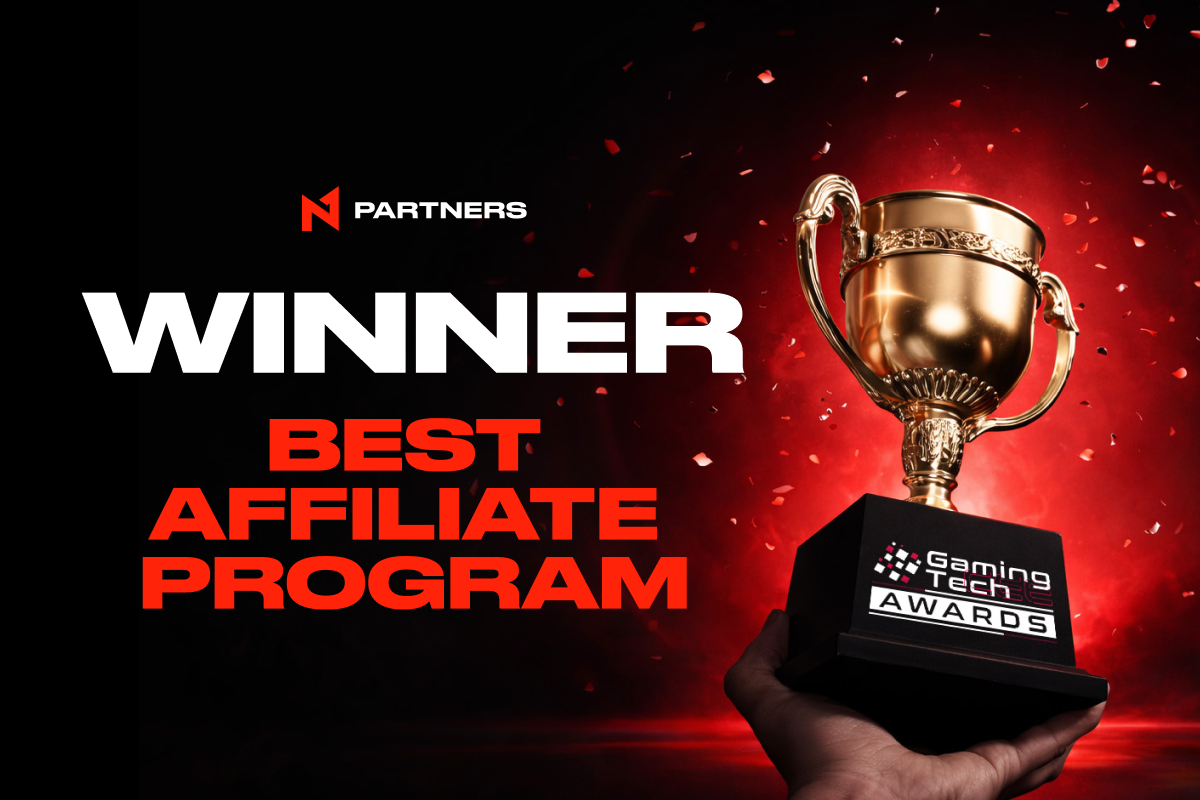
N1 Partners won Best Affiliate Program in Central and Eastern Europe at the GamingTECH Awards 2026, presented at the HIPTHER Prague Summit, marking another milestone in its growth and industry recognition.
This achievement highlights the strength of N1 Partners’ affiliate ecosystem and its consistent focus on delivering performance-driven solutions for partners across key markets.
Alexa Bond, Head of Affiliates at N1 Partners, commented:
“This award reflects the work we put into building more than just an affiliate program. We focus on creating a strong, reliable ecosystem where partners can scale with confidence, supported by transparent processes, high-performing products, and a team that understands the realities of the market. It’s great to see this approach recognized at the industry level, and we see it as motivation to keep moving forward.”
N1 Partners continues to stand out through a combination of high-converting brands, flexible partnership models, and a product-driven approach to retention and monetization. With strong Reg2Dep performance in Tier-1 GEOs, tailored offers, and a growing portfolio of casino and sportsbook brands, the company provides partners with reliable tools to scale and maximize revenue.
A key factor behind this recognition is N1 Partners’ focus on performance-driven initiatives that directly support partner growth. One of the latest examples is the N1 SEO Traffic Cup, a flagship affiliate tournament designed for SEO traffic. The campaign challenges partners to compete by driving high-quality traffic, improving their N1 Cup Score, and climbing the leaderboard to unlock premium rewards.
N1 Partners would like to extend our sincere thanks to HIPTHER for this recognition and to all our partners whose trust and collaboration continue to drive our growth. This achievement would not be possible without you.
N1 Partners is a multi-brand affiliate program and direct advertiser. The company unites 14+ casino and betting brands, operates across Tier-1 GEOs, delivers Reg2Dep rates of up to 70%, and offers competitive deals for top partners — CPA up to €700 and RevShare up to 45%. Trusted by 14,000+ partners, N1 Partners is recognized for its transparency, flexibility, and partner-first approach — where people and communication quality remain the foundation of long-term success.

With the release of a dynamic promotional video starring its ambassador, Simon Msuva, LEONBET continues a new chapter in its partnership with the Tanzanian national team forward.
Filmed in Tanzania, the campaign captures the energy of local football culture and highlights Msuva’s personality both on and off the pitch. One of the key moments of the video features the famous “Msuva Flip”- the player’s signature goal celebration, a backflip that fans immediately recognise whenever he scores.
The video is fast-paced and vibrant, reflecting the passion of Tanzanian football fans.The campaign also features Baraka Mpenja, a well-known sports commentator and voice of Tanzanian football, who brings additional authenticity and connection to the local audience.
Simon Msuva is known not only for his performances on the field but also for his strong charisma. According to the production team, he quickly immersed himself in the filming process and brought the same vibrant energy and character that fans associate with his game.
During the recent season, Msuva has scored several memorable goals that drew attention from fans and sports media alike. That excitement and emotion became the foundation for the new campaign.
“This campaign is part of our broader strategy to get closer to sports fans and build a stronger emotional connection with our audience. Working with talents like Simon Msuva allows us to speak the same language as the fans and be present where their passion is.” said Jérôme J. D., Regional Director of Operations.
The video continues the collaboration between LEONBET and Tanzanian national team captain Simon Msuva and supports the brand’s ongoing engagement with football fans in Tanzania.


Behind the Game: Retention That Drives Revenue
Traffic performance isn’t just about volume or source. What really matters is how well the product turns the first deposit...


N1 Partners Wins Best Affiliate Program at GamingTECH Awards 2026
N1 Partners won Best Affiliate Program in Central and Eastern Europe at the GamingTECH Awards 2026, presented at the HIPTHER...


LEONBET Shares a New Campaign with Tanzanian Ambassador Simon Msuva
With the release of a dynamic promotional video starring its ambassador, Simon Msuva, LEONBET continues a new chapter in its...


N1 SEO Traffic Cup: Multiply Your Traffic & Unlock Luxury Rewards
The N1 SEO Traffic Cup, the first tournament in the global N1 Traffic Cups series by N1 Partners, is approaching...


Meet N1 Partners at Conversion Conf in Warsaw
N1 Partners is heading to Conversion Conf Warsaw 2026, one of the key gatherings for affiliate marketing professionals, taking place...


N1 Insights April’s iGaming Trends You Shouldn’t Miss
April reflects changes that began taking shape in iGaming back in the first quarter, but are only now becoming systemic....


Join N1 SEO Traffic Cup by N1 Partners: Only Performance Wins the Game
N1 SEO Traffic Cup – the first tournament in the N1 Traffic Cups series by N1 Partners is gaining momentum....


Join N1 SEO Traffic Cup by N1 Partners Only Performance Wins the Game
N1 SEO Traffic Cup – the first tournament in the N1 Traffic Cups series by N1 Partners is gaining momentum....


Tiki Taka Play Partners with NetRefer for its Affiliate Marketing Platform
Spanish online casino operator Tiki Taka Play has partnered with NetRefer, the industry’s leading data-driven, AI-powered affiliate marketing platform, to...


N1 Faces: Shirin Mammadov — Building Trust That Drives Performance
Growth in affiliate marketing is easy to promise — much harder to sustain. Real long-term results are built on consistency,...
-

 News2 weeks ago
N1 Insights April’s iGaming Trends You Shouldn’t Miss
-
News1 week ago
Meet N1 Partners at Conversion Conf in Warsaw
-
News4 days ago
N1 SEO Traffic Cup: Multiply Your Traffic & Unlock Luxury Rewards
-
News3 days ago
LEONBET Shares a New Campaign with Tanzanian Ambassador Simon Msuva
-
News1 day ago
N1 Partners Wins Best Affiliate Program at GamingTECH Awards 2026
-
News7 hours ago
Behind the Game: Retention That Drives Revenue